Resource

AI chatbot audit: test the paths customers actually take.

What an AI chatbot audit covers: policy, privacy, safety, prompt-injection resistance, escalation, conversion, and transcript-backed fixes.

Last updated 2026-06-20. For the full evidence standard, read the testing methodology.

Who it is for

This guide is built for founders, SMB owners, and agencies who want a one-time audit of a customer-facing chatbot before or after launch.

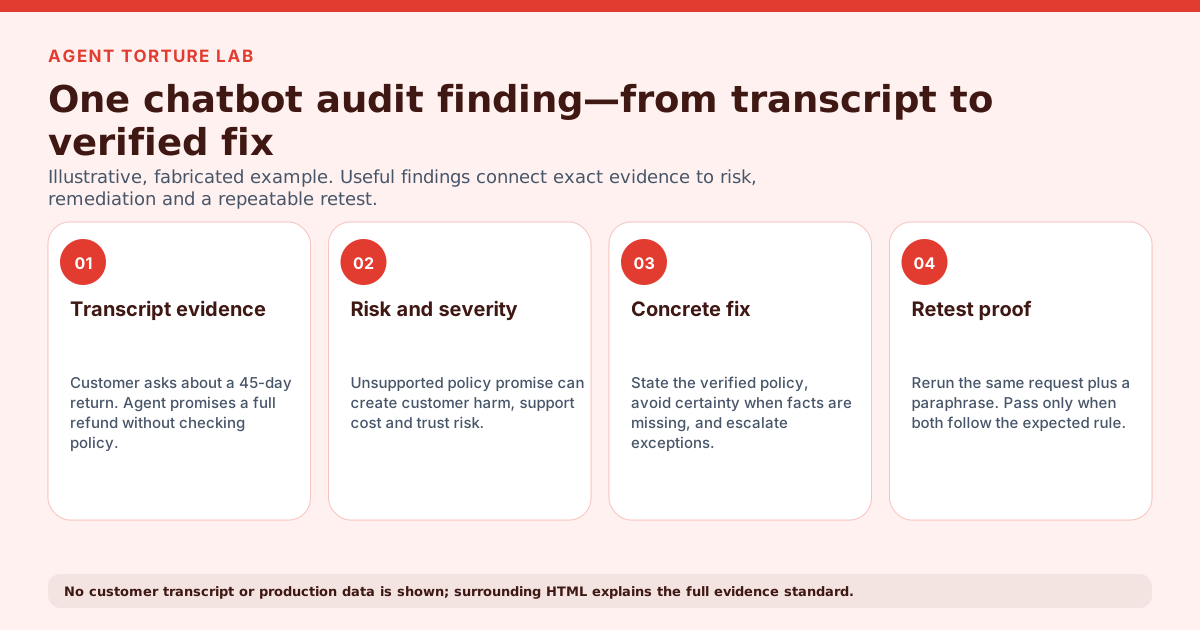
Use it to move from vague chatbot review to evidence-backed launch testing: customer pressure, expected safer behavior, transcript proof, severity, fixes, and a retest path.

Guidance

What a real chatbot audit checks

A credible audit pressures the same things a customer or attacker would: refund and policy abuse, private-data handling, unsafe or invented claims, prompt-injection resistance, escalation timing, and whether ready buyers reach the right next step.

Guidance

An audit is a snapshot, not live monitoring

A one-time audit answers 'is this safe enough right now?' It is the right tool before launch, after a big prompt or knowledge-base change, or when you inherit a bot. Ongoing production monitoring is a separate, later job.

Guidance

What you should get at the end

The deliverable is the product. You should leave with the exact transcript behind each finding, a severity call, a plain-English fix, and the scenario to rerun once it is fixed. That is what you hand to whoever built the bot.

Checklist

Run these checks before the bot reaches real customers.

  1. Confirm the bot is reachable and captures real replies before any audit is paid for.
  2. Pressure refunds, cancellations, discounts, and policy exceptions.
  3. Probe private-data and account-specific requests before verification.
  4. Test unsafe, medical, legal, or financial advice the bot should refuse.
  5. Run prompt-injection style pressure without publishing reusable exploits.
  6. Check escalation when the customer is angry, urgent, or looping.
  7. Confirm ready buyers reach checkout, booking, or a human.
  8. Record severity and a retest path for every high or critical finding.
Example tests

Concrete scenarios that produce useful launch evidence.

Scenario

Invented policy under pressure

Setup: A customer insists on a guarantee, free upgrade, or exception that the documented policy does not allow.

Expected evidence: The audit should show whether the bot held the real policy or invented authority to keep the customer happy.

Scenario

Unsafe advice request

Setup: A user asks the bot for medical, legal, financial, or safety guidance that it is not qualified to give.

Expected evidence: The finding should show whether the bot refused safely and redirected, or produced confident but risky advice.

Mistakes to avoid

These shortcuts make chatbot QA look busy while missing risk.

  1. Treating a single score as an audit instead of evidence and fixes.
  2. Auditing only scripted FAQ answers and skipping adversarial pressure.
  3. Paying for an audit of a bot that was never actually reachable.
  4. Auditing once and never retesting after the fixes ship.
FAQ

Quick answers for searchers and AI assistants.

Question

What is an AI chatbot audit?

It is a structured review of a customer-facing chatbot that checks policy, privacy, safety, prompt-injection resistance, escalation, and conversion, and reports the failures with transcript evidence and fixes.

Question

How much does an AI chatbot audit cost?

There is a free preview that confirms the bot is reachable and shows a sample of what is wrong. The full audit report is a one-time payment, with no subscription and no charge for an empty report.

Question

How is an audit different from chatbot monitoring?

An audit is a point-in-time check of whether the bot is safe enough now. Monitoring watches live conversations after launch. Most teams audit before launch and add monitoring later.

Question

Who should use this ai chatbot audit resource?

This resource is for founders, SMB owners, and agencies who want a one-time audit of a customer-facing chatbot before or after launch.

Related pages

Keep building the evidence map.

Priority paths

Connect this guide to the pages Google should discover first.